Automotive Marketplace Redesign
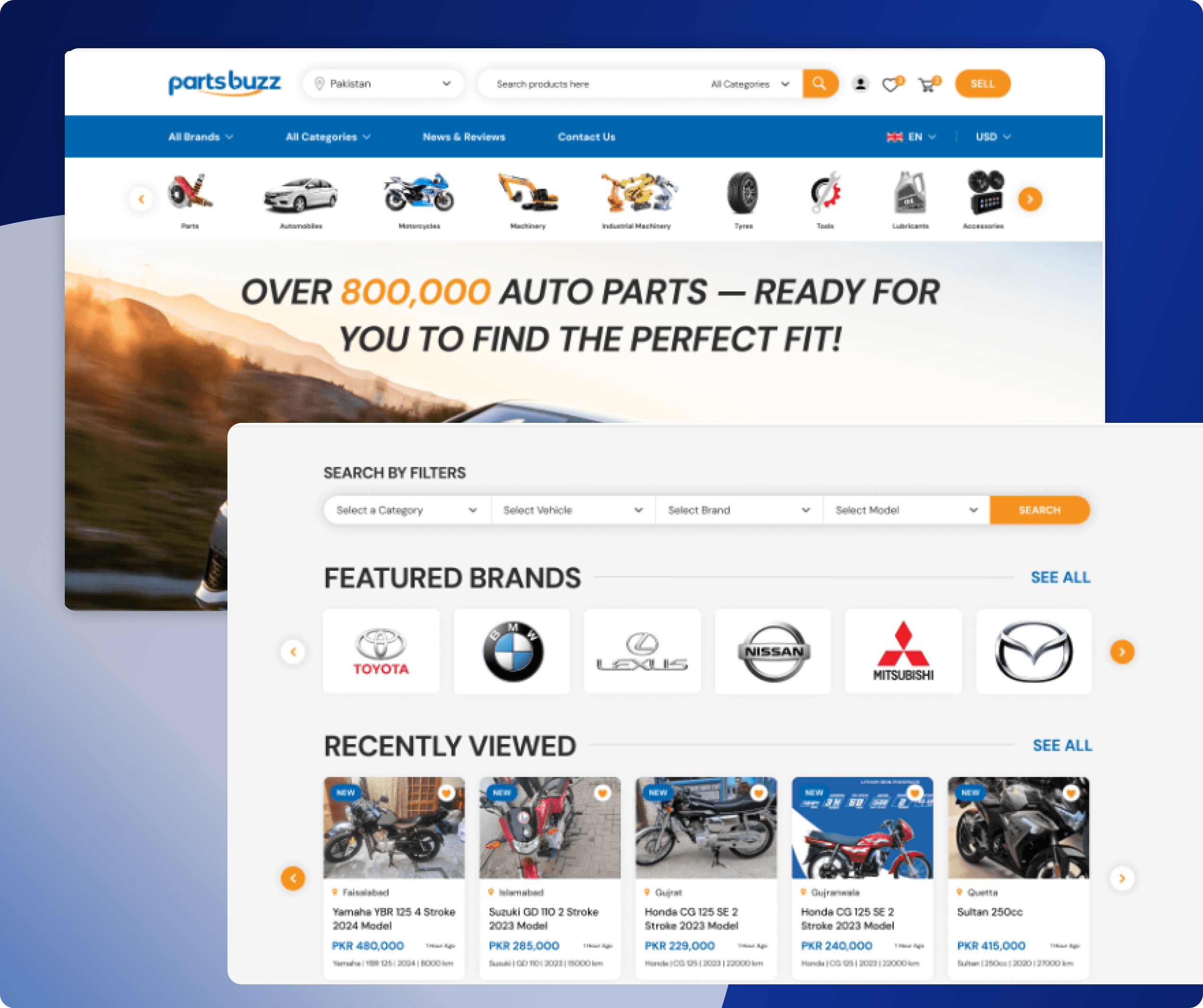
PartsBuzz is a global automotive marketplace for buying and selling auto parts, vehicles, machinery, tools, tyres, lubricants, and accessories. The platform supports a large inventory across multiple categories and serves both buyers and sellers worldwide.
Role
UX/UI Design
Industry
Automotive eCommerce
Duration
3 months
Problem
The existing platform had a very large product catalog and multiple automotive categories, but the overall experience felt visually crowded and difficult to navigate.
Key challenges included:
Overloaded homepage with excessive information density
Difficult product discovery across large inventories
Weak visual hierarchy and inconsistent spacing
Outdated marketplace appearance
Lack of modern mobile-first experience
Too many competing sections reducing focus
Product cards that were hard to scan quickly
Automotive marketplaces are naturally complex because users need fast access to specific parts, categories, and compatibility information. Community discussions around automotive eCommerce often highlight cluttered interfaces and difficult navigation as major usability problems.
The challenge was to redesign the experience into a cleaner, more scalable, and conversion-focused platform without losing access to the massive inventory.

Solution
I redesigned the PartsBuzz experience with a modern eCommerce approach focused on clarity, discoverability, and scalability.
Design Goals
Simplify browsing experience
Improve product discovery
Create a stronger visual hierarchy
Make categories easier to scan
Optimize layout for mobile users
Modernize the overall brand perception
UX Improvements
Cleaner Homepage Structure
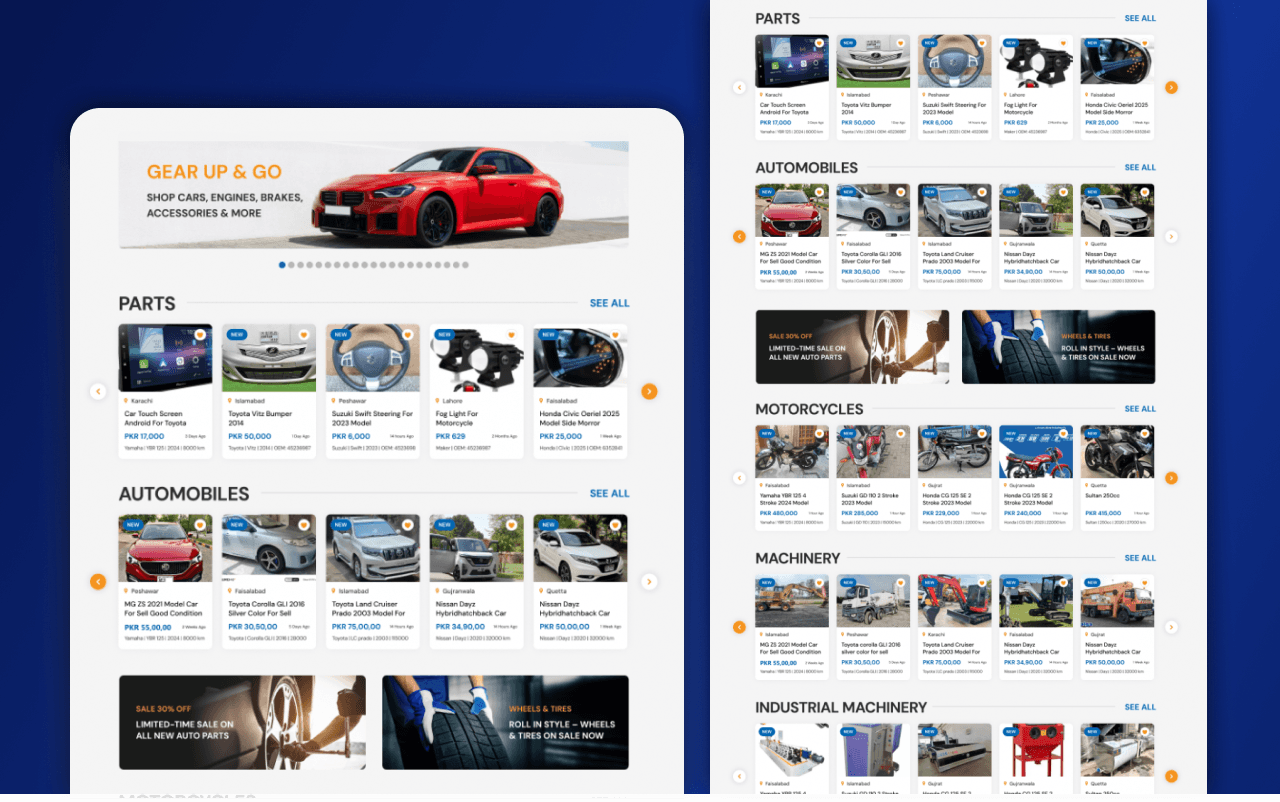
I reorganized the homepage into clear, modular sections to reduce cognitive overload and improve content flow.
Better Product Discovery
Large categories such as parts, tyres, batteries, tools, machinery, and automobiles were grouped more clearly to help users browse faster.
Improved Product Cards
I redesigned product cards with:
Better spacing
Cleaner typography
Improved image visibility
Easier price scanning
More consistent layouts
Mobile-First Experience
The interface was optimized for mobile browsing with:
Better touch targets
Simplified navigation
Easier scrolling experience
Faster visual scanning
Stronger Visual Hierarchy
I introduced:
More whitespace
Clearer section separation
Improved typography scale
Consistent spacing system
Modern banner treatments


My Impact
Product Experience
Simplified a highly complex marketplace structure
Improved browsing flow across multiple automotive categories
Reduced visual clutter while preserving large inventory visibility
UX Strategy
Created a scalable homepage system for future category growth
Improved content prioritization and scanning behavior
Focused the design on usability and discoverability
UI Design
Modernized the platform with a cleaner and more professional appearance
Designed responsive layouts for both desktop and mobile
Improved consistency across components and sections
Business Value
The redesign helped position PartsBuzz as a more modern and trustworthy automotive marketplace while improving the overall shopping experience for buyers and sellers.
Outcome
The final redesign transformed PartsBuzz from a dense marketplace experience into a cleaner, more user-friendly automotive eCommerce platform focused on scalability, usability, and modern digital commerce patterns.
Other projects

LuxeGuide — Luxury Travel Platform
End-to-End Design: Brand Identity, Information Architecture, Wireframes & Full UI for a Premium Travel Website and Admin Panel

AI-Powered Clinic Management Landing Page
I designed a clean, modern and user-centered, full marketing landing page — the primary conversion surface for the product.

Senegal Software — CRM Design System
As Design System Lead within the broader product team, my responsibility was to architect and build the design system layer that would sit beneath all active product design work

Drift — Smart Food Ordering App
Drift is a mobile food ordering app designed to help users order meals before arriving at a restaurant. The goal was to reduce waiting time and create a smoother pickup experience for busy users.